
How to Care for Travertine Floors in Mission Viejo, CA: What Homeowners Need to Know to Keep Their Stone Looking Beautiful
But while travertine is durable, many homeowners begin noticing changes over time:
- The floors start looking dull
- Grout lines become dark
- The stone looks dirty even after mopping
- Traffic areas become uneven in color
In many cases, the problem isn’t that the travertine is “old.” It’s that the stone is being cleaned or maintained improperly—or simply needs professional attention after years of use.
At Sureshine Care and Restoration Services, Inc., we specialize in professional natural stone care, including deep travertine cleaning, sealing, polishing, and restoration throughout Orange County.
Why Travertine Requires Different Care Than Tile
One of the biggest mistakes homeowners make is treating travertine like ceramic or porcelain tile.
Travertine is a natural calcium-based stone with tiny pores and surface variation throughout the material. Because of this, it behaves very differently than manufactured flooring.
Travertine can:
- Absorb dirt and moisture
- Trap contaminants deep inside the pores
- React to acidic cleaners
- Develop wear patterns over time
This is why many common household floor cleaners can actually make travertine look worse instead of better.
Why Travertine Starts Looking Dirty Over Time
Many Mission Viejo homeowners feel frustrated because they regularly mop their floors, yet the stone still looks dull or discolored.
That’s because most of the dirt is no longer sitting on the surface.
Over time:
- Dust and debris settle into the pores of the stone
- Grout lines absorb contaminants
- Mopping spreads dirty water across the floor
- Soap residue builds up gradually
Eventually, the floor develops a cloudy or uneven appearance that normal cleaning methods can’t fully remove.
The Importance of Using the Right Cleaners
One of the most important parts of travertine care is avoiding harsh or acidic chemicals.
Cleaners containing vinegar, bleach, or acidic ingredients can damage the surface and slowly dull the finish of the stone.
Instead, travertine should be cleaned using:
- pH-neutral stone cleaners
- Soft microfiber mops
- Clean water changed frequently during mopping
Simple maintenance habits make a major difference over time.
Why Dirt Is So Damaging to Travertine
Most homeowners think of dirt as something that simply makes floors look dirty.
But on natural stone, dirt actually acts like an abrasive.
As people walk across the floor:
- Tiny particles grind against the stone
- The finish slowly wears down
- Traffic lanes become more noticeable
- The surface loses clarity and consistency
This is one reason entry areas and kitchen walkways often show wear first.
Why Professional Deep Cleaning Makes Such a Difference
Professional travertine cleaning goes far beyond surface mopping.
At Sureshine, deep cleaning typically includes:
- Pre-treatment: Break down oils, dirt, and buildup trapped inside the stone
- Agitation: Loosen contaminants from pores and grout lines
- Hot water extraction: Flush out contaminants using high-pressure cleaning and vacuum recovery
- Detailing: Clean corners, grout lines, and edges thoroughly
This process removes years of embedded contamination that household cleaning simply cannot reach.
What Homeowners Usually Notice After Professional Cleaning
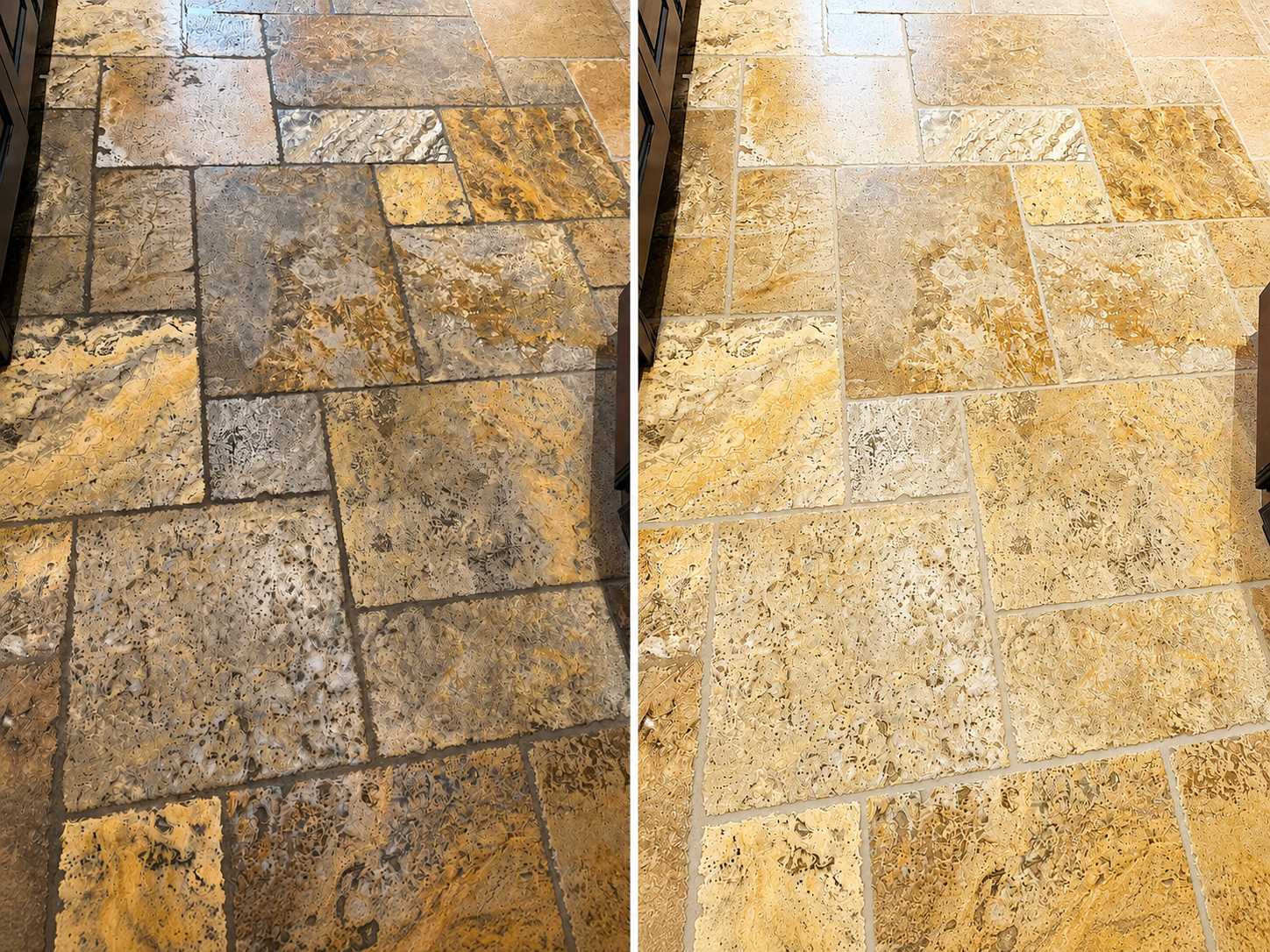
Many homeowners are surprised how dramatic the difference can be.
After professional cleaning, travertine often looks:
- Brighter and more natural in color
- More consistent across the floor
- Cleaner in grout areas
- Smoother and fresher overall
In many cases, homeowners say they forgot how beautiful the stone originally looked.
Why Sealing Travertine Matters
Once the stone is professionally cleaned, sealing helps protect it moving forward.
Travertine sealers help:
- Slow absorption of spills
- Reduce staining potential
- Make maintenance easier
- Protect the appearance of the stone
While sealing does not make travertine “maintenance-free,” it significantly improves how the stone performs over time.
When Travertine May Need Polishing or Restoration
Some travertine floors need more than cleaning alone.
If the surface has:
- Etching
- Heavy wear patterns
- Scratches
- Uneven finish
Professional honing and polishing may be necessary to fully restore the stone.
This process removes surface damage and refines the finish to a more consistent appearance.
Simple Ways to Extend the Life of Travertine Floors
Homeowners can dramatically improve the long-term appearance of their travertine by following a few simple habits:
- Use entry mats near exterior doors
- Vacuum or dust regularly
- Clean spills quickly
- Avoid acidic cleaners
- Schedule professional deep cleaning periodically
These small maintenance steps help preserve both the beauty and lifespan of the stone.
Schedule Travertine Cleaning and Restoration in Mission Viejo
If your travertine floors are looking dull, dirty, or uneven, professional cleaning and restoration can make a dramatic difference.
Call Sureshine: (714) 841-8300
Book an estimate: Schedule here
Frequently Asked Questions
How often should travertine floors be professionally cleaned?
It depends on traffic and use, but many homes benefit from professional deep cleaning every 1–3 years. Homes with pets, children, or heavy traffic may require more frequent service.
Can travertine become permanently stained?
Some stains can penetrate deeply into the stone if left untreated for long periods. However, many discoloration issues can be significantly improved or removed through professional restoration.
Is sealing travertine really necessary?
Yes. Because travertine is porous, sealing helps slow absorption and makes the stone easier to maintain over time.
Can damaged travertine floors be restored instead of replaced?
In many cases, yes. Professional honing, polishing, and restoration can dramatically improve worn or damaged travertine without the expense of replacement.
Why do grout lines get so dark?
Grout is highly porous and absorbs dirt, oils, and contaminants over time. Deep cleaning extraction is often needed to fully restore the appearance of grout lines.