
Why Marble Countertops Etch (and Why Traditional Sealers Don’t Stop It)
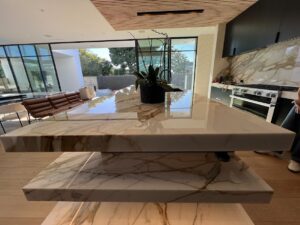
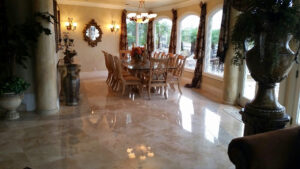
Walk through many of the newer custom homes in Frisco and you’ll quickly notice marble making a statement in kitchens, wet bars, bathrooms, laundry rooms, and even outdoor entertaining spaces. Designers and homeowners love marble because every slab is unique, giving each room a one-of-a-kind appearance that manufactured materials simply can’t duplicate.
Unfortunately, many homeowners discover something they weren’t expecting shortly after moving in.
After a splash of lemon juice, a few drops of vinegar, or even an unnoticed ring left behind by a wine glass, dull spots begin appearing across the countertop. The stone suddenly looks damaged, even though it was sealed only months earlier.
This often leads to one of the most common questions we hear at Sureshine Care and Restoration Services:
“I had my marble sealed. Why did it still etch?”
The answer surprises almost everyone.
The Biggest Misunderstanding About Marble Sealers
For decades, homeowners have been told that sealing marble protects it from damage.
While that statement isn’t entirely wrong, it’s also incomplete.
A penetrating stone sealer is designed to reduce the absorption of liquids into the stone. In other words, it helps buy time before substances like coffee, cooking oil, or red wine soak into the marble and create stains.
What a penetrating sealer does not do is create a protective barrier on top of the stone.
Because it resides below the surface, acids still come into direct contact with the marble itself.
That distinction is incredibly important.
What Is Marble Etching?
Marble is made primarily of calcium carbonate, the same mineral found in limestone.
Whenever an acidic substance touches calcium carbonate, a chemical reaction immediately begins.
Common household items that can cause etching include:
- Lemon juice
- Lime juice
- Orange juice
- Wine
- Champagne
- Tomato sauce
- Coffee
- Soft drinks
- Many salad dressings
- Cleaners containing vinegar or citrus
During this reaction, the acid actually changes the surface of the stone itself. The polished finish is chemically dissolved, leaving behind a lighter-colored dull area commonly referred to as an etch mark.
Unlike dirt or residue, etching cannot simply be wiped away because the stone has physically changed.
Why Sealers Cannot Prevent Etching
This is where many homeowners become frustrated.
They invested in sealing because they believed it would protect their marble from everyday use.
The reality is that penetrating sealers and etching address two completely different issues.
Think of a sponge that has been treated to absorb water more slowly. Liquids may take longer to soak into the sponge, but if the sponge itself reacts chemically with a substance placed on its surface, slowing absorption doesn’t stop that reaction.
The same principle applies to marble.
The acid reacts with the surface immediately—long before absorption becomes the issue.
Stains and Etches Are Not the Same Thing
Another common misconception is confusing stains with etches.
A stain occurs when a substance penetrates into the pores of the stone, changing its color.
An etch changes the surface texture and finish.
Many homeowners mistake an etch for a stain because both appear as visible marks, but they require completely different solutions.
Understanding the difference helps explain why a quality sealer may successfully reduce staining while doing absolutely nothing to prevent etching.
Can Etching Be Repaired?
Yes.
Depending on the severity, professional honing and polishing can remove etching by restoring the damaged surface.
Technicians carefully refine the stone using progressively finer abrasives until the finish is once again uniform.
The countertop is then polished to the desired sheen—whether matte, satin, or polished.
While restoration can make marble beautiful again, many homeowners naturally ask another question:
“How do I keep this from happening again?”
A Different Approach to Protecting Marble
Rather than relying solely on penetrating sealers, many luxury homeowners are choosing a surface protection system specifically designed to prevent both staining and etching.
MORE® AntiEtch® is a professionally installed, optically clear protective coating engineered specifically for marble, limestone, onyx, and other calcium-based natural stones.
Instead of penetrating below the surface, it forms a durable protective layer that becomes the sacrificial surface when exposed to acidic foods and beverages.
That means common kitchen accidents occur on the protective layer—not directly on the marble itself.
How MORE® AntiEtch® Is Professionally Installed
Every installation begins with evaluating the condition of the stone. Existing etches, scratches, and wear are corrected before protection is applied.
The installation process typically includes:
- Inspection and evaluation
- Protection of surrounding areas
- Surface preparation
- Professional application of MORE® AntiEtch®
- UV curing
- Finish refinement to the selected appearance—matte, satin, or polished
- Final detailing and inspection
Once cured, the surface is ready for everyday use in approximately 30 minutes.
MORE® AntiEtch® is designed to last a lifetime and carries a written 10-year stain and etch-free warranty.
Who Benefits Most from MORE® AntiEtch®?
While nearly any marble owner can benefit, the system is especially valuable for:
- Families with children
- Busy kitchens
- Frequent entertainers
- Coffee enthusiasts
- Wine lovers
- Luxury custom homes
- High-end bathrooms with marble vanities
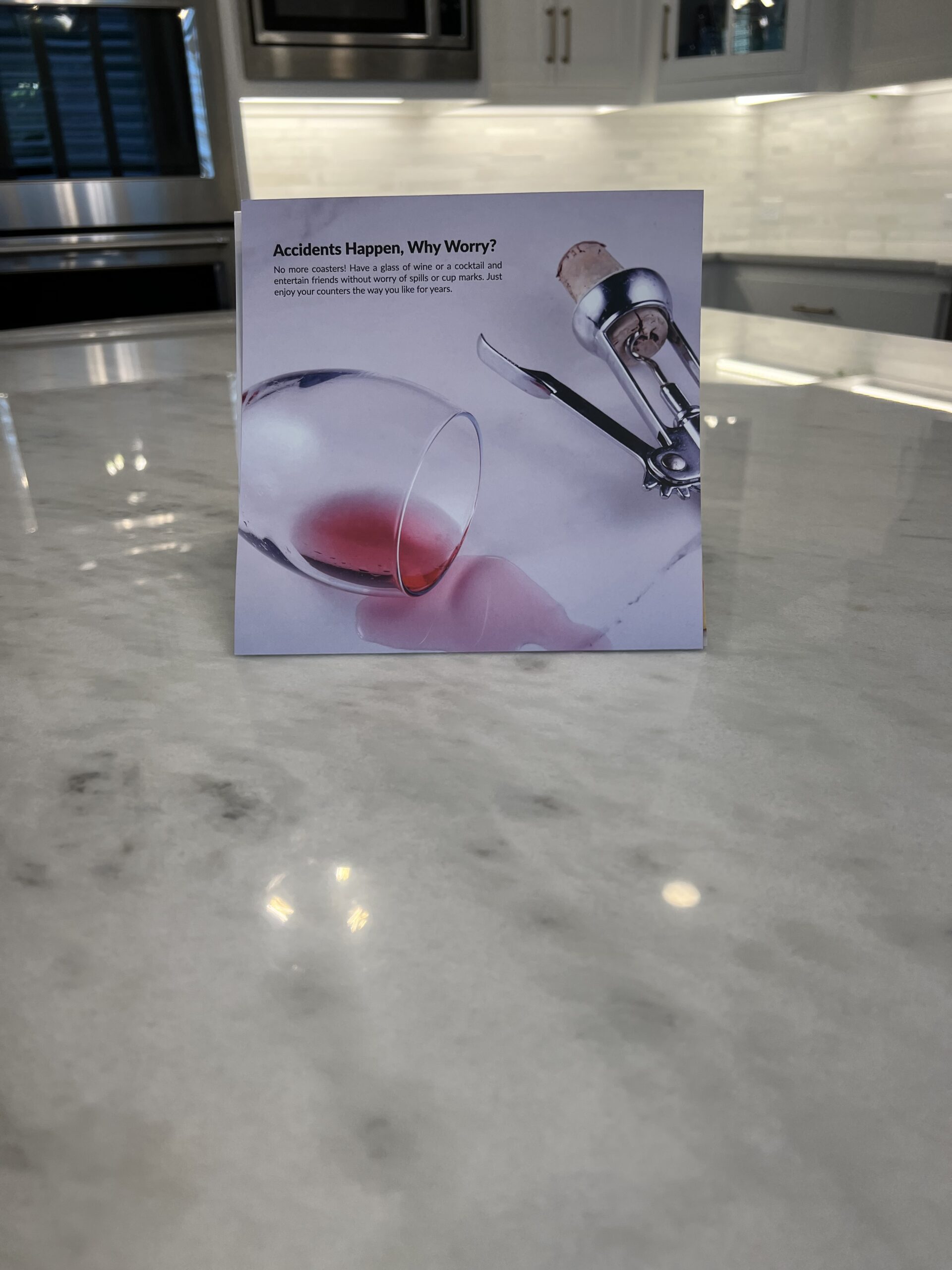
Instead of worrying about every spill, homeowners can simply enjoy their marble as it was intended.
Protect Your Marble Investment in Frisco
Marble countertops are an investment that deserves long-term protection. If your countertops are already etched or you’re looking for a better solution than traditional sealers, Sureshine Care and Restoration Services can help.
We proudly serve homeowners throughout Frisco and the Dallas–Fort Worth area with professional marble restoration and certified MORE® AntiEtch® installation.
Call Sureshine today at (972) 734-8933 or schedule your free consultation online at https://sureshinecares.com/book-an-estimate-now/.
Frequently Asked Questions
Can I buy a sealer that prevents etching?
No. Traditional penetrating stone sealers are designed to reduce staining by slowing liquid absorption. They do not stop acids from reacting with the surface of marble.
Does granite have the same problem?
Most granite is much more resistant to acidic foods because it does not contain the same high levels of calcium carbonate found in marble and limestone.
Can existing etches be removed before installing MORE® AntiEtch®?
Yes. Existing etches, scratches, and wear are typically corrected through professional restoration before the protective coating is installed, creating a clean, uniform surface.
Will MORE® AntiEtch® change how my countertops look?
No. The finish can be customized to a matte, satin, or polished appearance while preserving the natural beauty and character of the stone.
How long does MORE® AntiEtch® last?
Professionally installed MORE® AntiEtch® is designed to last a lifetime and carries a written 10-year stain and etch-free warranty when installed and maintained according to manufacturer guidelines.