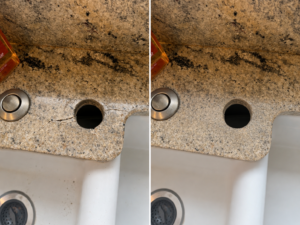

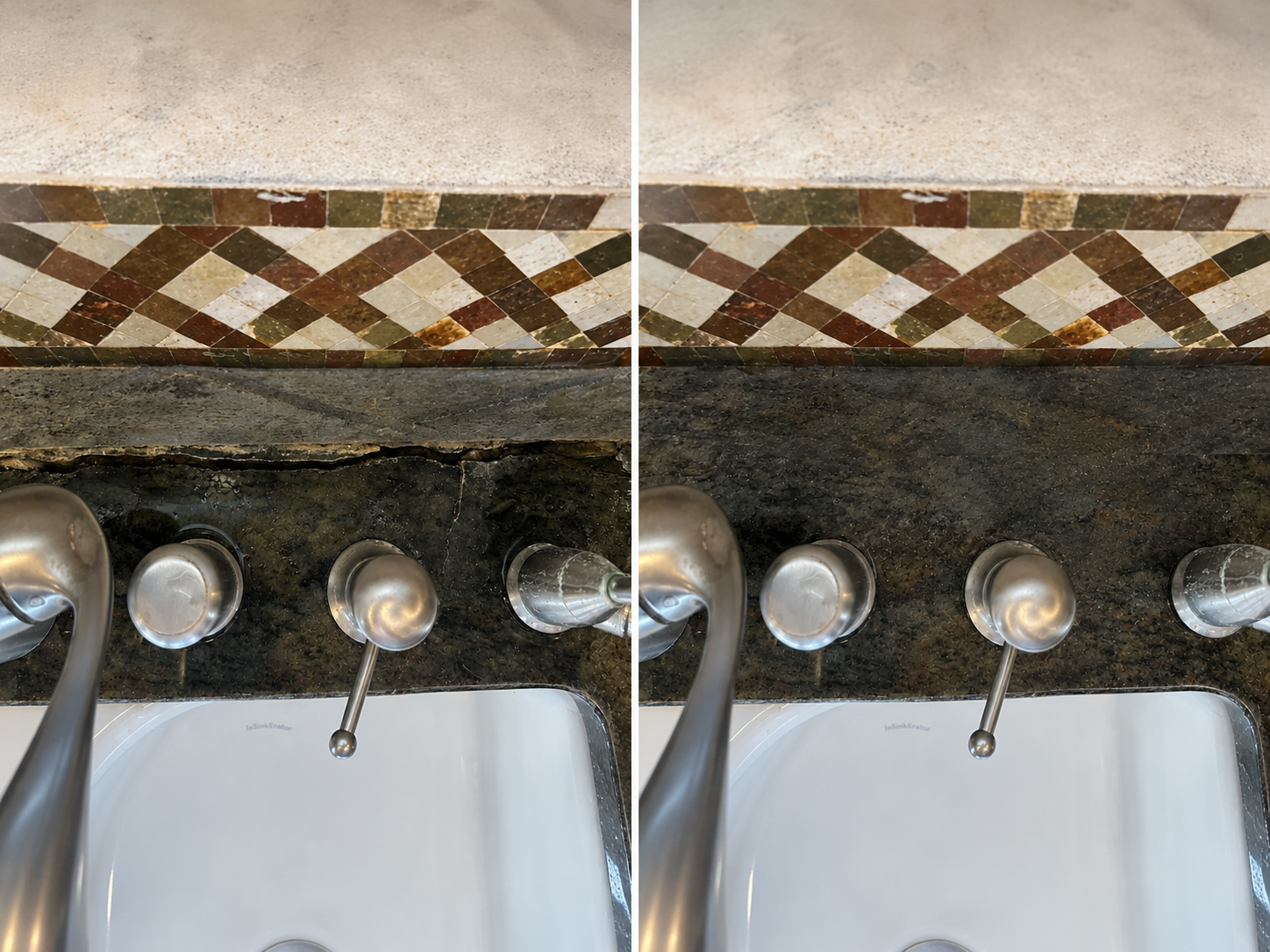
Granite Crack Repair vs Replacement in Pacific Palisades, CA: What Homeowners Should Know Before Tearing Out Their Countertops
So when a crack suddenly appears—especially near the sink or along a seam—it immediately becomes stressful.
Many homeowners assume the worst:
“Do I need to replace the entire countertop?”
In reality, the answer is often no.
At Sureshine Care and Restoration Services, Inc., we specialize in granite crack repair that restores both the appearance and structural integrity of the stone without the disruption of full replacement.
Why Granite Cracks Happen in the First Place
One of the biggest misconceptions about granite is that because it’s extremely hard, it’s impossible to crack.
Granite is durable—but it’s still stone. And stone behaves differently depending on how it’s supported, fabricated, and used over time.
In Pacific Palisades homes, we often see cracks caused by:
- Stress near sink openings: The stone becomes narrower and weaker around sink cutouts
- Large unsupported spans: Long kitchen islands and overhangs create leverage and stress
- Cabinet movement: Small settling shifts underneath the slab can transfer pressure into the stone
- Rusted support rods: Older countertops sometimes contain metal reinforcement that expands as it corrodes
- Impact damage: Heavy objects dropped near weak points can start fractures
Many cracks actually begin very small and slowly spread over time before homeowners fully notice them.
Why Sink Areas Are the Most Common Problem Spot
The area in front of and behind the sink—often called the sink rail—is one of the weakest structural areas of a granite countertop.
That’s because:
- The stone is cut thinner in this section
- The sink opening removes structural support
- People naturally lean or apply pressure in this area daily
- Water exposure can contribute to long-term stress
Even in beautifully built luxury kitchens, this section of granite experiences a tremendous amount of ongoing pressure.
That’s why many cracks begin there first.
What Most Homeowners Get Wrong About Replacement
It’s understandable why homeowners jump to replacement. A visible crack can feel serious.
But replacing granite countertops is often much more involved than people expect.
Replacement can require:
- Demolition of the existing countertops
- Possible damage to backsplash or surrounding finishes
- Disconnecting plumbing and appliances
- Finding a matching slab (which is often impossible)
- Long fabrication and installation timelines
In many Pacific Palisades homes, the original slab may have been selected years ago and may no longer be available.
That means replacement can sometimes create even larger design challenges.
Why Professional Repair Is Often the Better Solution
When properly evaluated and repaired, many granite cracks can be stabilized and blended extremely well.
The key difference is that professional repair focuses on:
- Addressing the cause of the crack
- Restoring structural integrity
- Blending the appearance naturally
- Preventing future movement
A proper repair is not simply “filling a line.”
It involves understanding how the countertop failed and correcting the stress that caused it.
Our Granite Crack Repair Process
At Sureshine, we approach granite crack repair with a long-term mindset.
- Evaluation: Identify the cause and extent of the crack
- Stabilization: Correct movement or support issues if necessary
- Structural bonding: Use professional stone adhesives designed for strength and durability
- Color matching and blending: Recreate the natural movement and appearance of the stone
- Polishing: Restore a smooth, consistent finish
The goal is not just to improve the appearance—but to create a repair that performs well over time.
When Repair Makes the Most Sense
Repair is often the best option when:
- The crack is localized to one area
- The slab is otherwise stable
- The underlying stress can be corrected
- The homeowner wants to preserve the original stone
This is especially true in high-end homes where the countertops are tied closely to the overall design aesthetic.
When Replacement Might Be Necessary
While repair is often possible, there are situations where replacement becomes the better path.
This may include:
- Extensive structural failure across multiple areas
- Severe slab instability
- Major fabrication problems throughout the countertop
However, these situations are less common than many homeowners think.
Why Timing Matters
Granite cracks rarely improve on their own.
Over time, cracks can:
- Spread further across the slab
- Collect dirt and moisture
- Become more visible
- Lead to movement near the sink
Addressing the issue early typically results in a cleaner, more stable, and more cost-effective repair.
Schedule Granite Crack Repair in Pacific Palisades
If you’re seeing a crack in your granite countertop, it’s worth having it professionally evaluated before assuming replacement is necessary.
Call Sureshine: (714) 627-9001
Book an estimate: Schedule here
Frequently Asked Questions
Can granite cracks actually be repaired permanently?
When the underlying cause is addressed and proper structural repair methods are used, granite crack repairs are designed to hold up long-term under normal residential use.
Will the repair still be visible?
Most repairs blend very well, especially on darker or more patterned granite. While some repairs may remain slightly visible under certain lighting conditions, the improvement is usually dramatic.
Why do cracks near sinks happen so often?
The sink rail is one of the weakest areas of the countertop because much of the stone has been removed for the sink opening, leaving a narrower section exposed to daily stress.
Is replacing granite usually more expensive than repairing it?
In most cases, yes. Replacement often involves demolition, fabrication, plumbing disconnection, and installation costs that make it significantly more expensive than repair.
Can older granite countertops still be repaired successfully?
Absolutely. In many cases, preserving the original slab is actually preferable because matching older stone can be extremely difficult.