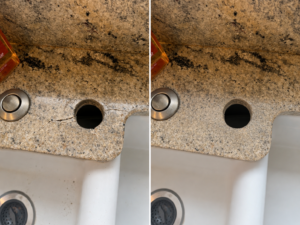

Granite Crack Repair Near the Sink in Southlake, TX
The good news? Most of these cracks can be repaired without replacing your countertop.
At Sureshine Care and Restoration Services, Inc., we specialize in granite crack repair that restores both the strength and appearance of your stone.
—
Why Granite Cracks Form Near the Sink
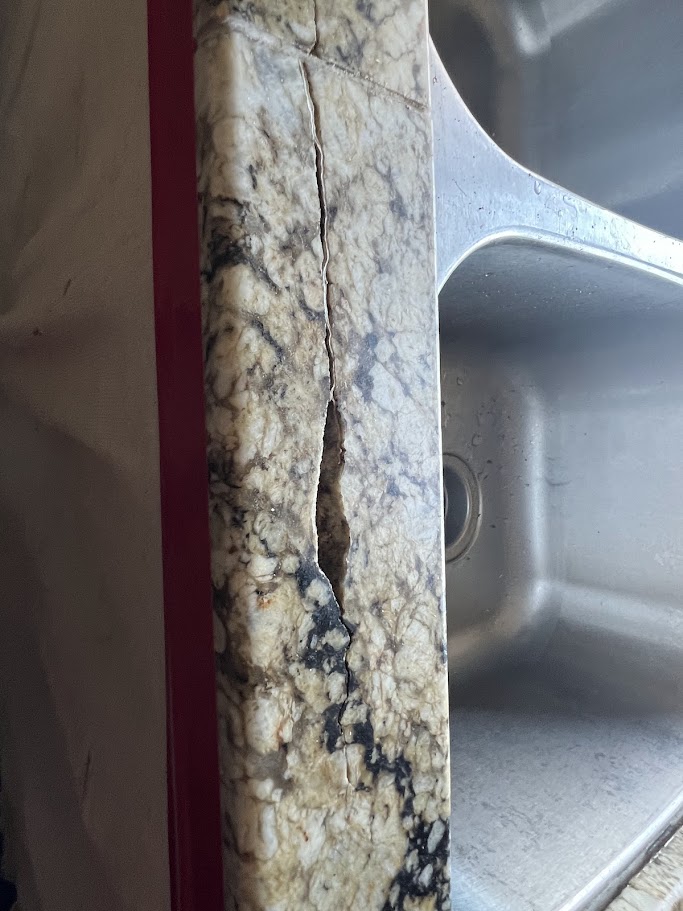
The sink rail—the narrow strip of granite in front of the sink—is one of the weakest structural areas of your countertop.
Here’s why:
- Reduced thickness: The stone is cut thin to accommodate the sink opening
- Constant stress: Leaning, pressure, and daily use add force over time
- Moisture exposure: Water weakens underlying materials if not properly sealed
- Hidden reinforcement issues: In some cases, metal rods inside the stone can rust and expand
Even in well-built Southlake kitchens, these factors can combine over time and lead to cracking.
—
What Most Homeowners Don’t Realize
Many homeowners assume that once granite cracks, replacement is the only option.
In reality, most sink rail cracks are:
- Localized (not affecting the entire slab)
- Repairable with proper stabilization
- Caused by fixable stress points
The key is addressing the cause of the crack—not just filling the line.
—
What Happens If You Ignore the Crack
A small crack may seem harmless at first, but over time it can:
- Spread across the countertop
- Allow moisture into the structure
- Lead to movement or separation near the sink
- Become more visible and harder to blend
Early repair almost always leads to better results—both structurally and visually.
—
Our Granite Crack Repair Process
We focus on restoring strength first, then appearance.
- Evaluation: Identify the cause of the crack (stress, movement, support)
- Stabilization: Reinforce the area if needed to prevent future movement
- Structural bonding: Use high-strength adhesives designed for stone
- Color blending: Match the natural tones and pattern of your granite
- Polishing: Restore a consistent finish across the surface
The goal is not just to hide the crack—but to make sure it doesn’t come back.
—
Why Southlake Homes Are Especially Prone
Many Southlake kitchens feature:
- Large islands
- Wide sink cutouts
- Extended overhangs
- Heavy-use family layouts
These design elements look incredible—but they also increase stress on the stone, especially near the sink.
—
Schedule Granite Crack Repair in Southlake
If you’re seeing a crack near your sink, now is the time to address it before it spreads.
Call Sureshine: (972) 734-8933
Book an estimate: Schedule here
—
Frequently Asked Questions
How do I know if my sink crack is serious?
If the crack is growing, separating, or you can feel movement when pressure is applied, it’s likely structural. Even small cracks should be evaluated early, because they often expand under daily use.
Can you repair a crack that runs through the sink area?
Yes. Sink rail cracks are one of the most common repairs we perform. The key is stabilizing the area before bonding so the repair holds long-term.
Why do some granite cracks come back after repair?
This usually happens when the underlying cause—like cabinet movement or lack of support—is not addressed. A proper repair focuses on both the crack and the structural issue behind it.
Will the repair be noticeable?
Most repairs blend very well, especially on darker or patterned granite. While no repair is completely invisible in every lighting condition, the goal is to make it as natural and unnoticeable as possible.
Is it better to repair early or wait?
Earlier is almost always better. Smaller cracks are easier to stabilize and blend, and you avoid the risk of spreading or additional damage.