

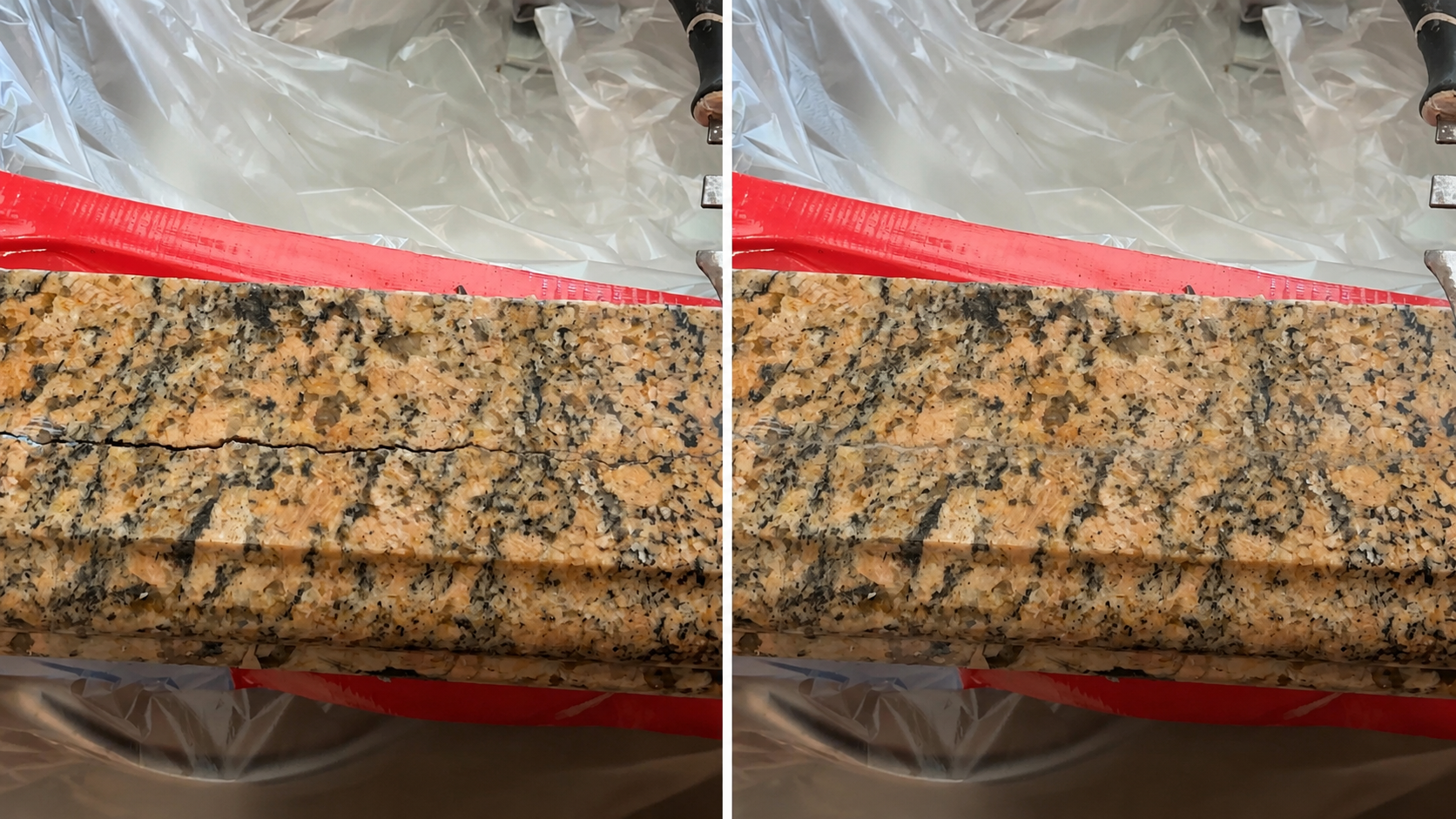
How to Tell If Your Granite Countertop Crack Is Structural (And Why It Matters)
But despite its incredible strength, granite isn’t indestructible.
One of the most common calls we receive at Sureshine Care and Restoration Services begins with the same concern:
“I found a crack in my granite countertop. Do I need to replace it?”
Fortunately, the answer is almost always no.
The first step is determining whether the crack is simply cosmetic or whether it indicates a structural failure. Understanding the difference can save thousands of dollars while helping prevent additional damage.
Not Every Crack Means the Countertop Is Failing
The word “crack” tends to make homeowners think the entire countertop is coming apart. Fortunately, granite is extremely forgiving, and many visible cracks never affect the structural integrity of the stone.
Some cracks occur naturally within the stone itself and have existed since the granite was formed deep within the earth millions of years ago. These naturally occurring features are often called fissures. They are part of the stone’s unique character and typically require no repair.
Other cracks develop after installation because of movement, stress, impact, or problems with the countertop’s structural support.
Knowing which type you’re dealing with is critical.
What Is a Structural Crack?
A structural crack occurs when the granite has actually fractured and the countertop is no longer functioning as one solid piece.
Unlike a harmless surface fissure, a structural crack weakens the stone and can continue to worsen if left untreated.
These cracks most commonly occur in areas where the stone experiences the greatest amount of stress.
Typical locations include:
- Across the front sink rail
- Behind the sink
- Near cooktop openings
- Large unsupported overhangs
- Countertop seams
- Corners around cutouts
The Sink Rail Is the Most Common Failure Point
By far, the most common structural repair we perform involves granite sink rails.
The narrow strip of granite located between the sink opening and the front edge of the countertop supports significant daily stress. Every time someone leans against the sink, fills a large pot with water, or places heavy objects nearby, force is transferred into this relatively thin section of stone.
To reinforce this area, fabricators commonly install steel rods underneath the granite during fabrication.
While this reinforcement adds strength, it can also create problems years later.
The Hidden Cause Many Homeowners Never See
Many older granite countertops were reinforced with untreated steel rods.
If water reaches these rods over time—often because the sink caulking has deteriorated—they begin to rust.
As steel rusts, it expands.
That expansion creates tremendous pressure inside the granite until eventually the stone cracks from underneath.
In many homes, the crack wasn’t caused by someone standing on the countertop or dropping something heavy. Instead, it developed slowly over many years as rust continued pushing outward inside the stone.
Signs Your Crack May Be Structural
While only a professional inspection can confirm the extent of the damage, several warning signs suggest the crack may require structural repair.
- The crack runs completely through the granite.
- The two sides can move independently.
- The sink feels loose or drops slightly when pressure is applied.
- The crack continues growing longer.
- You notice rust staining around the crack.
- The crack is located across the front sink rail.
- Water leaks through the crack into the cabinet below.
If you notice one or more of these symptoms, scheduling an inspection sooner rather than later is recommended.
When a Crack Is Probably Cosmetic
Not every visible line indicates structural damage.
Granite often contains natural fissures that follow the mineral movement within the slab. These features are completely normal and are sometimes mistaken for cracks.
A cosmetic issue may also involve a small chip, resin separation at a seam, or a shallow surface crack that has not penetrated through the thickness of the stone.
Although these conditions may affect appearance, they usually don’t compromise the strength of the countertop.
Why Waiting Can Make Repairs More Difficult
One mistake homeowners sometimes make is assuming a small crack can wait.
Unfortunately, structural cracks rarely improve on their own.
Daily use continues placing stress on the damaged area, allowing the crack to lengthen or widen over time. Water intrusion may also accelerate corrosion if rusted reinforcement rods are involved.
Early repairs are often simpler and help preserve more of the original stone.
How Professional Structural Granite Repair Works
At Sureshine, our Granite Crack Repair System is designed to restore structural integrity—not simply hide the crack.
Every repair begins with determining why the granite failed.
Depending on the condition of the countertop, the repair may include:
- Removing the sink.
- Exposing the damaged reinforcement.
- Removing the rusted portion of the reinforcement rod.
- Cleaning and preparing the fractured stone.
- Rebuilding the countertop using structural adhesives.
- Leveling the repaired section.
- Grinding and polishing the repair.
- Reinstalling and recauling the sink.
Rather than simply filling the visible crack, the goal is to correct the underlying structural problem whenever possible.
Repair Is Usually Better Than Replacement
Many homeowners are surprised to learn that professional structural repairs often preserve the original countertop better than replacement.
Replacing a section of granite can introduce new seams, require demolition, and make matching the original stone extremely difficult—especially if the countertop was installed years ago.
Professional structural repair typically allows homeowners to keep their existing countertop while restoring its strength and appearance.
Lifetime Structural Warranty
Our Granite Crack Repair System includes a Lifetime Structural Warranty on qualifying repairs. That means the repaired area is warranted against coming apart again under normal conditions. Maintaining proper sink caulking remains important to help minimize future moisture intrusion, and the warranty does not cover new damage caused by outside forces or misuse.
Schedule a Granite Crack Evaluation in University Park
If you’ve noticed a crack around your sink or elsewhere on your granite countertop, don’t assume replacement is your only option.
An experienced inspection can determine whether the issue is cosmetic or structural and recommend the most appropriate solution.
Sureshine Care and Restoration Services proudly serves homeowners throughout University Park and the Dallas–Fort Worth area with professional granite crack repair, polishing, and restoration.
Call today: (972) 734-8933
Schedule your free estimate: Book Online
Frequently Asked Questions
Can a cracked granite countertop really be repaired?
In many cases, yes. Professional structural repairs can restore the strength and appearance of granite countertops, especially when the underlying cause of the crack is properly addressed.
How can I tell if my countertop has a natural fissure instead of a crack?
Natural fissures are part of the stone itself and typically don’t separate, widen, or move. Structural cracks generally penetrate the stone and may show signs of movement or continued growth. A professional inspection is the best way to determine the difference.
Should I stop using my sink if the front rail is cracked?
If the crack appears structural or the sink feels loose, it’s wise to limit heavy use until the countertop has been inspected. Continued stress may allow the damage to worsen.
Will the repaired area completely disappear?
Our goal is to restore both the structural integrity and appearance of the countertop. While repairs are often remarkably inconspicuous, natural stone varies in color, crystal structure, and movement, so some evidence of the repair may remain under close inspection.
How can I help prevent another structural crack?
Keeping sink caulking in good condition, avoiding excessive weight on unsupported areas, and addressing small cracks promptly can help extend the life of your countertop. Periodic inspections are also beneficial if your countertop is older or has experienced previous repairs.